
Email: sales@xtalong.com Tel: +86-28-80192520
Email: sales@xtalong.com Tel: +86-28-80192520
Introduction
In Crystal Oscillator circuit design, understanding the relationship between load capacitance (CL) and external capacitors (C1, C2) is crucial for frequency stability and device performance. Miscalculating these values can lead to frequency shifts or even failure to oscillate.
What is Load Capacitance (CL)?
Load capacitance (CL) is a critical internal electrical parameter specified by the crystal manufacturer. It represents the amount of capacitance the crystal "expects" to see from the entire circuit to vibrate at its precise rated frequency.
Standard Values: 15pF, 18pF, 20pF (Common in standard PCBA).
Low Power Applications: 6pF, 7pF, 9pF (Crucial for wearables like smartwatches and Bluetooth headsets).
Note: CL is fixed during the manufacturing process and cannot be changed by the user.
What is External Capacitance (C1 & C2)?
External capacitors (often called matching capacitors) are the physical components you solder onto the PCBA, connected to the crystal's input and output pins.
The Relationship & Calculation Formula
To achieve the target frequency, the external capacitors must account for the Stray Capacitance (Cs) of the PCB. The general formula is:
CL = (C1 * C2) / (C1 + C2) + Cs
(Where Cs usually ranges from 3pF to 5pF depending on the board layout.)
Why Getting the Values Right Matters?
Frequency Fine-Tuning:
Larger External Capacitor: The frequency shifts in a negative direction (slower).
Smaller External Capacitor: The frequency shifts in a positive direction (faster).
Oscillation Stability: Proper matching ensures the circuit starts up reliably across different temperatures and voltages.
Key Differences at a Glance:
| Feature | Load Capacitance (CL) | External Capacitance (C1/C2) |
| Nature | Internal Parameter (Fixed) | External Component (Variable) |
| Source | Crystal Specification | Added by Circuit Designer |
| Purpose | Defines oscillation frequency | Matches circuit to the crystal |
| Adjustment | Cannot be changed | Can be adjusted for fine-tuning |
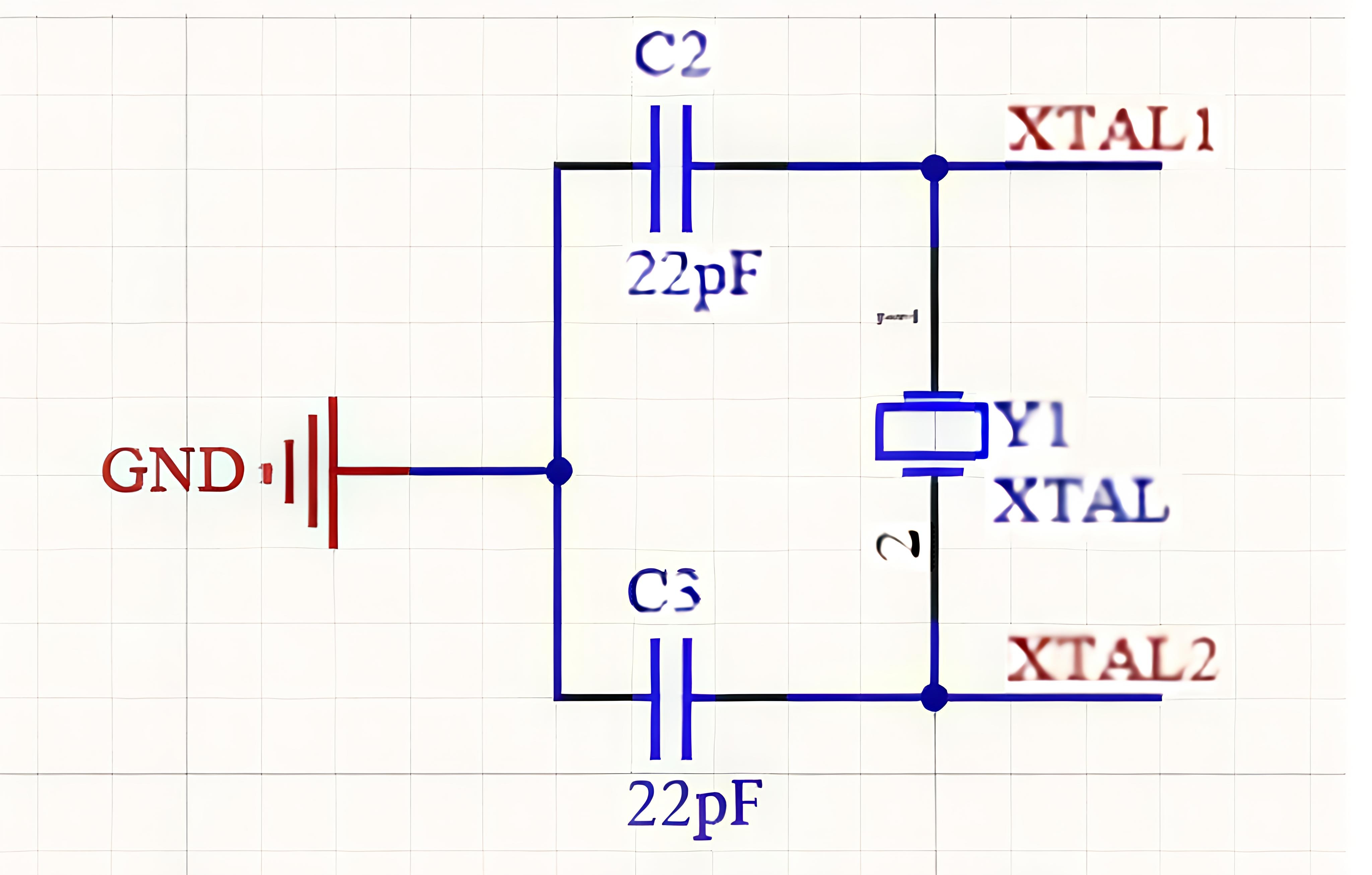
Pro Tips for Passive vs. Active Crystals
Passive Crystals: Require external capacitors to form the resonant circuit.
Active Crystal Oscillators: Do NOT require external matching capacitors as the load circuit is integrated inside the package.
You may want to know: Soil is An Important Material for Plants
Contact: Katya Vane
Phone: +86-18884136031
Tel: +86-28-80192520
Email: sales@xtalong.com
Add: No.4 of XinHang Road, West of High-tech zone, Chengdu City 611731, China
We chat
